
Ultimate Guide to Worship Stage Presence
Your stage presence as a worship leader is about more than just singing – it’s how you connect with your congregation and guide them into meaningful worship. Here’s the bottom line: 93% of communication comes from nonverbal cues like body language, tone, and expressions, while only 7% comes from words. If your presence feels disengaged or unsure, it can distract others from worship.
Key Takeaways:
- Preparation is critical: Memorize your material to avoid barriers like music stands and stay focused on leading.
- Body language matters: Stand tall, use open posture, and plan your movements to create a welcoming atmosphere.
- Confidence comes from preparation and mindset: Replace stage fright with focus on leading others to worship, not performing.
- Engage through eye contact and verbal cues: Simple actions like scanning the room or inviting participation can break the "invisible wall" between you and your congregation.
- Spiritual readiness is essential: Spend time in prayer and Scripture to lead from a place of overflow.
Practical tools like accompaniment tracks can also help streamline your music preparation, allowing you to focus on connecting with your congregation. Remember, your energy sets the tone – when you lead with confidence and purpose, the congregation follows.
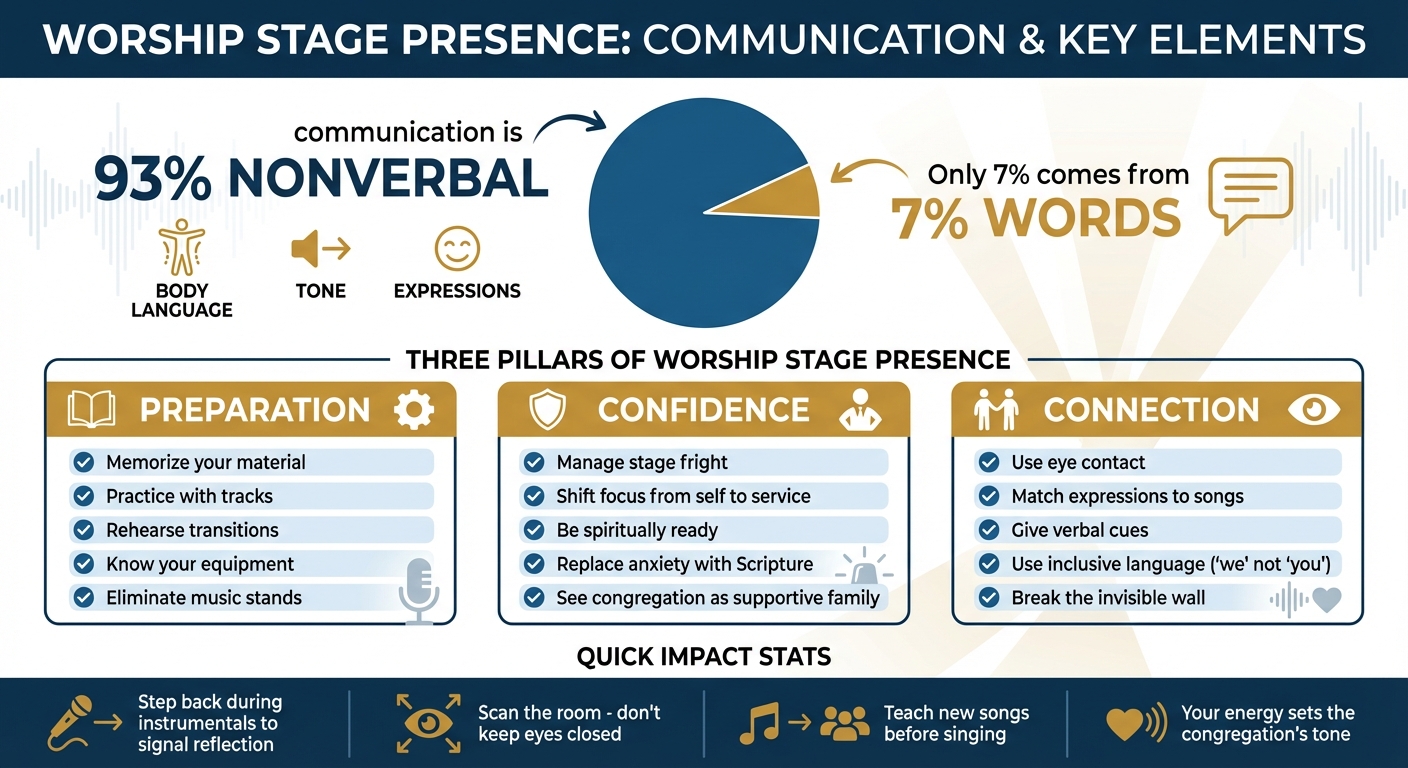
Worship Stage Presence Communication Statistics and Key Elements
How to Prepare for Leading Worship
Practice and Know Your Material
Memorization breaks down walls between you and your congregation. Depending on a music stand can create both a physical and mental divide, making it harder to connect with the people you’re leading. Bob Kauflin, author of Worship Matters, puts it plainly:
We shouldn’t only practice to get it right; we should practice enough that we can’t get it wrong.
When you’re fully prepared, you can focus on guiding others into worship. During rehearsals, practice vocal lead-ins by repeating the first words of each phrase – this makes it easier for the congregation to follow along. Even if you’ve memorized prayers or transitions, having a short script can help you avoid awkward pauses on stage.
Physical Preparation: Posture and Body Language
Your body speaks before you sing a word. Stand tall with an open posture, facing forward while occasionally turning to engage with all sections of the room. Use the step-back technique during instrumental breaks – physically stepping away from the microphone signals a reflective moment for the congregation rather than a time to sing [1, 3]. Alex Enfiedjian, founder of Worship Ministry Training, highlights the importance of this:
Use your body as a tool to lead people, rather than a distraction to dissuade people.
Before leading, relax your muscles to avoid tension that could impact your voice. Plan your movements ahead of time – know when to stand, sit, or shift positions to ensure smooth transitions. If possible, rehearse with the same microphone and sound system you’ll use during the service. This helps you fine-tune your volume and positioning. Pair these physical preparations with a calm and focused mind to fully engage in leading worship.
Mental and Spiritual Preparation
All the technical prep in the world won’t matter without spiritual readiness. Before diving into your song set, take time to be still. Whether it’s going for a walk, reading Scripture, or sitting quietly with God, this time grounds you spiritually. Worship leader Skye Reedy shares how this approach has shaped her leadership:
Leading people from that place of overflow has allowed me to watch Him minister in power and guide every detail.
How to Build Confidence on Stage
Managing Stage Fright
Stage fright is a common hurdle for many worship leaders. In fact, the Anxiety & Depression Association of America points out that the fear of being the center of attention can sometimes stem from social anxiety disorder. The symptoms are hard to ignore – shaky hands, a pounding heart, and a flood of self-conscious thoughts.
To ease these nerves, shift your focus from how you look to the impact of your worship. Instead of dwelling on anxious thoughts, replace them with scriptural affirmations like 2 Timothy 1:7, which reminds us of the spirit of power, love, and self-discipline. Kelly Thompson, a worship leader who overcame intense stage fright, shares a quote from Charles Spurgeon that resonates deeply:
Growth can be painful, change can be painful; but nothing is as painful as staying stuck somewhere you don’t belong.
It also helps to see your congregation not as critics but as a supportive family cheering you on. The people in your church community genuinely want you to succeed. If your anxiety persists, consider reaching out to a mentor for guidance, honest feedback, and prayer. Another key to building confidence is preparation. When you know your material inside and out, you eliminate the extra stress that comes with uncertainty.
Once you’ve calmed your nerves, allow yourself to connect emotionally with your congregation.
Being Genuine and Expressing Emotion
Your energy on stage sets the tone for the congregation. If you appear disengaged, they’ll pick up on it. Authenticity is about sharing the work God is doing in your life. As worship leader Rocky puts it:
It has everything to do with outwardly communicating the inward work that God is doing inside of us.
A simple smile can make the stage feel more welcoming. If you’re singing about joy, but your face tells a different story, it can create confusion. To address this, record your services and watch them later. This "game film" can reveal any distracting habits or expressions that don’t align with the message of the song. Even when you’re not leading a specific part, sing along off-mic to stay connected with the heart of the worship.
Building relationships throughout the week also plays a big role in authenticity. When you know the people you’re leading, it becomes easier to lead with sincerity and connect with them naturally.
How to Engage the Congregation
Using Eye Contact and Visual Cues
Eye contact can transform the way you connect with your congregation. It breaks down the invisible wall between the leader and the people, creating a shared worship experience. Katie from The Church Collective explains this beautifully:
Our worship can still be personal without being private.
Keeping your eyes closed for most of the service can unintentionally create a "private" worship moment, which may alienate your congregation. Instead, scanning the room and using simple, intentional movements – like stepping toward the mic before starting a new phrase – can subtly invite participation. Similarly, during instrumental breaks, stepping back from the mic signals a time for reflection.
Even physical barriers like music stands can hinder engagement. Memorizing your music not only eliminates these obstacles but also allows for better posture and more consistent eye contact. These nonverbal cues are small but powerful tools to draw people into the worship experience.
While gestures and movements speak volumes, pairing them with clear verbal guidance strengthens the connection even further.
Using Verbal Encouragement
Clear, concise verbal prompts can make a world of difference in engaging your congregation. Simple phrases like "Let’s sing that again", "Raise your voices with us", or "Feel free to sit and rest" provide clarity and direction. When introducing a new song, take a moment to teach the melody or repeat key sections so everyone feels comfortable joining in.
Brief vocal cues can also help, especially with more complex songs. Using inclusive language like "we" instead of "you" fosters a sense of unity and avoids creating an "us vs. them" dynamic.
Another effective technique is what Tommy Walker calls the congregational solo moment. This involves stopping the band or lead vocals during a chorus to let the congregation sing a cappella. As Walker explains:
Not only does your congregation get to hear themselves, it can be nice to give everyone’s ears a break from hearing your band’s wall of sound… This puts a healthy sense of pressure on them to sing.
This moment allows worshipers to hear their own voices, encouraging active participation and a deeper connection.
Adding brief context to songs can also enrich the experience. Sharing a relevant scripture passage or explaining the theme behind a song helps people understand its purpose. However, it’s important to match your tone to the mood of the song. For example, an overly enthusiastic delivery might feel out of place during a reflective song about repentance.
sbb-itb-5a6b344
Tools and Resources for Worship Leaders
How Christian Accompaniment Tracks Help
Preparation and authentic expression are key to leading worship effectively, but having the right tools can elevate your impact even further. Accompaniment tracks provide a dependable and professional musical foundation, freeing you to focus on leading worship rather than juggling every musical detail.
Consistently practicing with the same arrangement helps you internalize the song’s structure. This not only eases stage nerves but also eliminates the need for music stands or chord sheets. As worship leader and author David Santistevan explains:
Excellence in worship isn’t just a musical excellence – it’s attitude, preparation, and stage presence.
One great resource is Christian Accompaniment Tracks (https://christianaccompanimenttracks.net), which offers a wide variety of tracks that closely resemble original artist performances. At just $5.00 per track, it’s an affordable way to build a versatile music library. Plus, the consistent structure of these tracks helps you time visual cues and verbal transitions, creating a seamless worship experience that guides your congregation effortlessly.
How to Use Accompaniment Tracks in Live Worship
Before incorporating a track into your worship set, listen to it repeatedly to memorize its flow – whether it’s the verses, choruses, bridges, or instrumental interludes. Pastor and worship leader Brendan Prout emphasizes the importance of preparation:
Practice is personal; Rehearsal is relational. Rehearsal is not the place for you to learn your parts. It’s the place for you to learn everybody else’s parts.
During live worship, use body language to signal transitions. For example, stepping closer to the microphone can cue a vocal section, while stepping back signals an instrumental break. If you’re blending live instruments with the track, ensure they complement the recorded rhythm for a cohesive sound.
Flawless practice is essential. When you’ve mastered the track, you can ditch the music stands and focus on engaging your congregation. Eye contact is crucial since only 7% of communication comes from words – the remaining 93% is nonverbal. Knowing the track inside and out allows you to use instrumental breaks to move across the stage, encourage visual worship, or even step back and let the congregation take the lead in singing. With a solid routine and well-integrated tracks, you can enhance your stage presence and create a worship experience that resonates deeply with your audience.
The 5 ESSENTIALS Of Worship Stage Presence
Conclusion
Worship stage presence comes down to preparation, confidence, and connecting with the congregation. When you’re so familiar with your material that you can lead without relying on chord charts or music stands, you create space to focus on the people you’re serving. As worship leader Rocky puts it, stage presence "has everything to do with outwardly communicating the inward work that God is doing inside of us". This approach lays the groundwork for a confident and genuine presence that resonates with your congregation.
Confidence stems from embracing your role as a servant, not a performer. Andrea Olson, Founder of Overflow Worship, explains it well: "Worship leading is what you do, not who you are. It’s crucial to connect deeply with the purpose behind your role. This is the foundation of your confidence". Shifting your mindset from performer to host eases the pressure, enabling you to serve your congregation more effectively, building on the rehearsal and preparation practices discussed earlier.
Non-verbal communication is just as important as the music itself. The energy you bring will be reflected by the congregation. If you appear disengaged, they likely will be too. Katie from The Church Collective emphasizes, "Our congregations need us to fulfill our role with authority and confidence so they can worship effortlessly".
Breaking the invisible barrier between the stage and the congregation is key to engagement. Let your expressions match the song’s mood – rejoice during upbeat anthems and show reverence during reflective moments. As David Santistevan wisely notes, "A great stage presence is expressing what the song says".
Ultimately, your stage presence is fueled by your personal devotion. Private worship strengthens your public ministry. Practice transitions out loud, pray for your congregation before the service, and trust that the preparation and tools you’ve cultivated will allow you to lead with both genuine connection and authority.
FAQs
How can I overcome stage fright as a worship leader?
Overcoming stage fright as a worship leader begins with a shift in perspective. Instead of focusing on the idea of performing for an audience, center your heart on worshiping God. Prayer can be a powerful tool to help you realign your thoughts and remind yourself that your role is to guide others into worship – not to strive for perfection.
Preparation plays a huge role in building confidence. Make sure you’re well-rehearsed – know your lyrics, chords, and cues inside and out. To take it a step further, you can simulate a live worship setting by practicing with a backing track. For example, Christian Accompaniment Tracks offers professional recordings for $5.00 each, giving you the chance to rehearse with high-quality instrumentation. While practicing, focus on staying relaxed, maintaining eye contact, and using the same gestures you plan to use on stage.
On the day of leading worship, calming techniques can make a big difference. Try deep breathing exercises or visualization to ease your nerves. When you step on stage, stand tall, avoid slouching, and make intentional eye contact with the congregation. By combining consistent practice, calming strategies, and a prayerful mindset, you’ll grow in confidence and lead worship with sincerity and poise.
How does body language impact worship leading?
Body language serves as a vital tool for worship leaders, allowing them to express the essence of a song even before a single lyric is sung. Through gestures, posture, and facial expressions, leaders can communicate emotions like reverence, joy, or closeness with God, inspiring the congregation to mirror those feelings. Standing tall, avoiding nervous habits, and adopting an open, confident stance not only helps the leader feel grounded but also builds trust and fosters a sense of connection.
Simple actions like natural hand movements, a warm smile, and intentional eye contact can strengthen the bond between the leader and the congregation, drawing everyone deeper into worship. When body language reflects the meaning of the song – like lifting hands in praise or bowing in humility – it encourages genuine participation. On the flip side, rigid or distracted movements can unintentionally pull attention away from the worship experience. By practicing deliberate gestures and maintaining a calm, assured presence, worship leaders can guide their congregation more effectively.
To make this process smoother, tools like Christian Accompaniment Tracks can be a game-changer. These high-quality backing tracks, priced at just $5.00 each, allow worship leaders to focus fully on their presence and connection without worrying about the musical complexities.
How can accompaniment tracks improve stage presence during worship?
Accompaniment tracks offer a reliable and polished musical backdrop, freeing worship leaders to concentrate on connecting with their congregation rather than stressing over technical elements like chord progressions or timing. This allows them to lead with confidence, using meaningful eye contact, natural gestures, and a more engaging stage presence.
Since these tracks faithfully capture the essence of the original performances, they help sustain the emotional rhythm of the service, keeping the focus on worship without unnecessary interruptions. And with tracks priced at just $5.00 each from Christian Accompaniment Tracks, churches can elevate their worship experience while fostering a more immersive and spiritually enriching environment.